Franchises
Europa Universalis
Europa Universalis was founded by the Swedish studio Paradox in 2000 as a grand strategy game in which the player leads one of hundreds of states from the late Middle Ages (the game begins in 1444) through several centuries of history, deciding on diplomacy, trade, colonization, and war across a map divided into thousands of provinces. Unlike the turn-based strategy games of its era, the series introduced a continuously running game clock that could be slowed, sped up, or paused, and placed heavy emphasis on political mechanics such as dynastic marriages, religious conflict, and the casus belli that determines whether a war is considered legitimate. Already the first game and its sequel Europa Universalis II (2001) offered a fundamentally different kind of historical strategy than the tightly scripted scenarios common among contemporaries.
Europa Universalis III (2007) deepened both the map and the systems considerably, adding more detailed management of trade nodes and colonies along with a clearer interface, which drew a wider audience beyond the genre's core fans. Europa Universalis IV (2013) then became the largest and longest-supported entry, gradually expanded with dozens of expansions and smaller packs that over the years reworked trade, religion, institution management, and AI behavior, so that years into its support the game played quite differently from how it launched.
The series is prized for the depth and openness of its systems, where almost any state can be steered toward great-power status with enough patience, and for the lively community that grew up around it through modding and marathon multi-hour sessions. Alongside Paradox's other historical titles, such as the Hearts of Iron series, it helped define the entire grand historical strategy genre on modern PC and showed that even a complex simulation could find a broad audience.
Entries in the series (5)
-

Europa Universalis · 2000
-
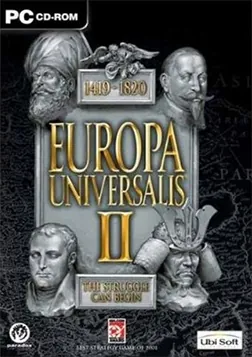
Europa Universalis II · 2001
-

Europa Universalis III · 2007
-
Europa Universalis: Rome · 2008
-
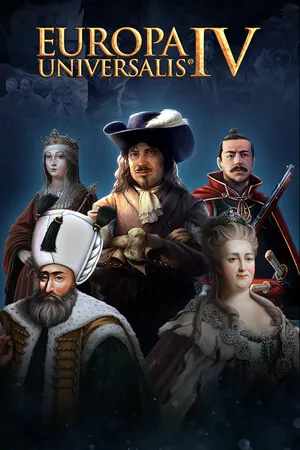
Europa Universalis IV · 2013