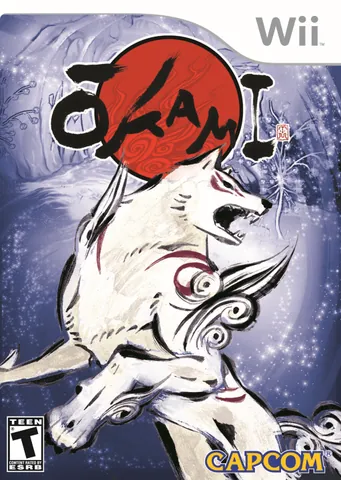
Okami
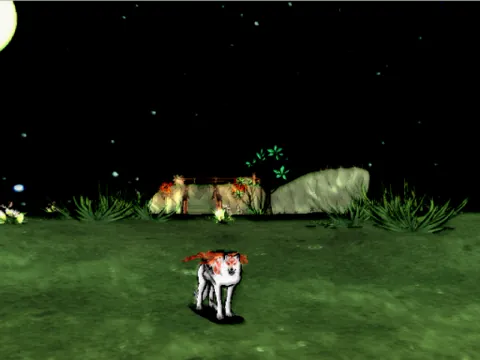
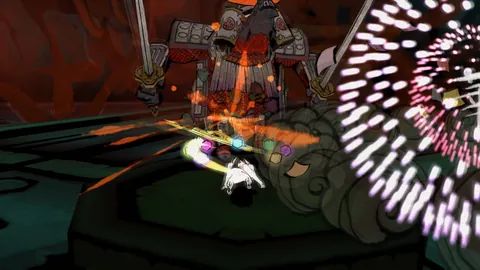
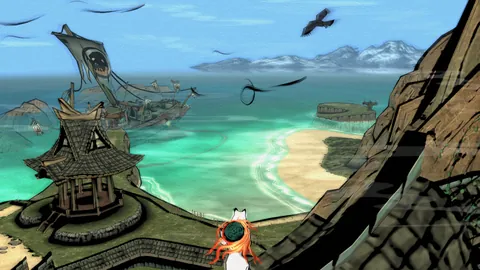
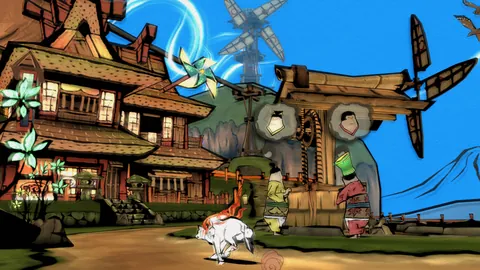
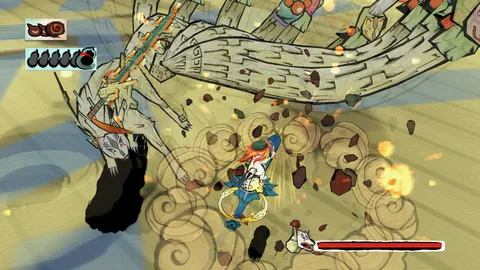
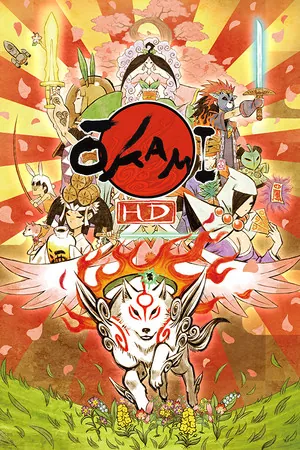
Okami originally came out on PlayStation 2 from Studio Clover, and it reached Wii in a port that made use of the most important thing the new console offered: pointer aiming. The player controls the sun goddess Amaterasu in the form of a white wolf and travels through a Japanese landscape rendered as a living ink-wash painting. The world is cursed, its colors have vanished, and the task is to bring life back to trees, fields, and people, which the game shows literally: heal an area and it blossoms before your eyes.
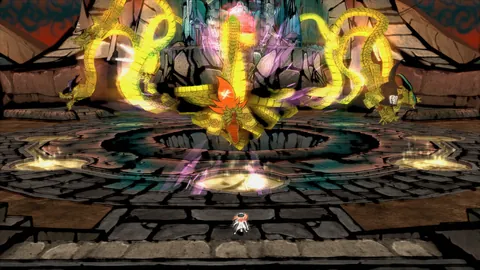
The key mechanic is the celestial brush. At any moment the game pauses, the image turns into paper, and the player draws symbols on it that have an immediate effect in the world. A circle creates the sun and turns night into day, a horizontal line cuts through an enemy or a rope, a spiral unleashes wind, and a zigzag line calls down lightning. On Wii you draw directly with the remote, which feels more natural than the original analog stick, though somewhat less precise. The rest of the game is a classic action-adventure in the vein of Zelda: a sprawling landscape, puzzles, dungeons, collectibles, and side quests, this time built on Japanese legends, including the story of the eight-headed dragon Orochi.
The atmosphere is unmistakable. The ink-wash art style overcomes technical limitations, and the game still looks gorgeous today; the music draws on traditional Japanese instruments, and the dialogue is delivered through an odd babbling speech that surprisingly works. Contemporary reviews were enthusiastic, but commercially the game never achieved what it deserved, becoming a textbook example of an underrated classic. The Wii version has minor changes to the end credits compared to the original, but otherwise it's the complete experience. Okami's influence shows up everywhere games use art style as their main expressive tool. Its length is considerable, and the game takes its time, so the first hours may feel slow, but the patience pays off richly. High-resolution editions later came out on newer platforms, but drawing with the remote remains, for many players, the most natural way to experience it on Wii.
Game 24 of 140 for Nintendo Wii