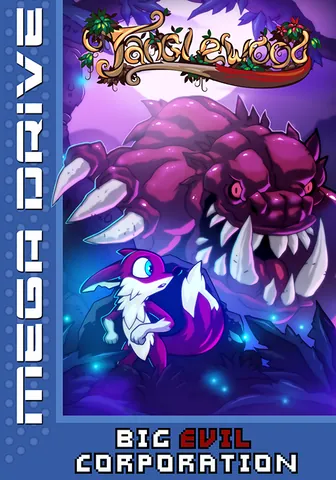
Tanglewood -ish
There are games born out of pure stubbornness — out of the conviction that an old 16-bit machine has not yet said its last word. And it is precisely in that spirit that this puzzle-platformer for the SEGA Mega Drive enters the scene, made as modern homebrew on the original hardware. It is not an emulator trifle written in the comfort of today's tools without regard for limits — it is a title that respects the rules of a console from the turn of the eighties and nineties and tries to squeeze the maximum out of them.
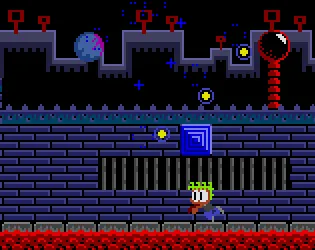
At the heart of the experience is a combination of platforming dexterity and puzzle-solving thinking. You advance through an environment where movement alone is not enough — you must read the layout of the levels, account for the dynamics of jumps and use elements of the surrounding world to your advantage. This duality is key to the genre: one moment you react reflexively, the next you stop and think about how to even get further. It is precisely in that tension between action and deliberation that the whole game's juice lies.
The Mega Drive was always a console with a distinctive sound and a sharp, contrasting palette, and homebrew creation often uses these qualities consciously and with love. The pixel-art environment and chiptune accompaniment are not merely nostalgic scenery — they are the tools with which the game communicates its atmosphere. For players who grew up on classics like Sonic or Shinobi, it is a return to a familiar audiovisual language, only with modern sensibility for level design.
The homebrew scene around the Mega Drive has come noticeably alive over the past decade. The community of developers has rediscovered the joy of programming for the 68000, new tools, libraries and physical releases on actual cartridges are appearing. Titles of this kind are proof that the platform did not die with the end of official support — it merely moved into the hands of enthusiasts who keep it alive.
With lesser-known homebrew projects a measure of humility is in order: I do not state specific sales figures, awards or the authors' names here, because that would be speculation. What can be stated, though, is the feeling of the game itself — the methodical pace, the satisfaction of a solved puzzle and the gratification of a perfectly timed jump. That is the experience the platform offers across its best output.
If you like games that make you think and react at the same time, and you also root for the idea that old consoles still have something to offer today, this is exactly the kind of discovery for which it is worth exploring the current Mega Drive scene.
Why play: For the fusion of platforming action and puzzles on real 16-bit hardware and for the joy that the Mega Drive is alive even today.
Game 38 of 151 for SEGA Mega Drive