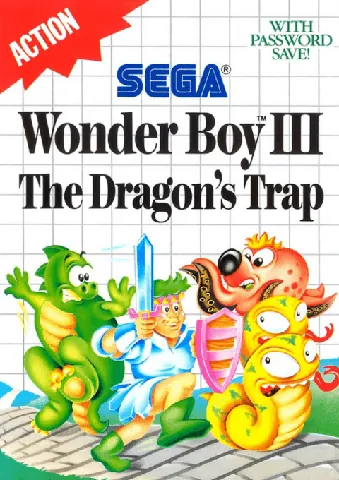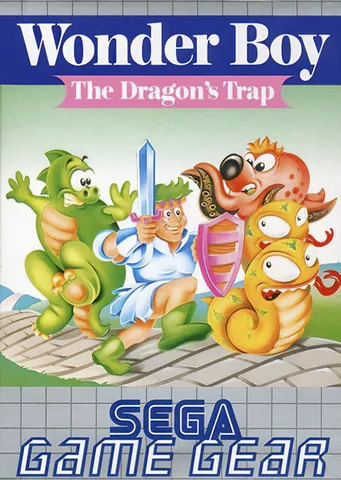
Wonder Boy III: The Dragon's Trap
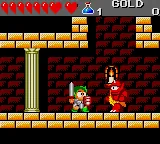
Being turned into a lizard has never felt so liberating. Wonder Boy III: The Dragon's Trap ranks among the peaks of the whole Wonder Boy series, and on the Game Gear it offers one of the most striking adventures the platform ever received — a clever mix of action platformer and role-playing elements.
The game's ingenious idea lies in its transformations. After a dragon's curse strikes him, the hero changes into various animal creatures — a lizard, a mouse, a piranha, a lion and more — and each form has different abilities and a different way of moving. Some passages you can only clear as a mouse able to climb special walls, others require swimming or breathing fire. This turns the game into an exploratory adventure with a Metroidvania flavor, where the world gradually opens up depending on which shape you currently hold.
On top of that, the game tunes its role-playing elements: you collect gear, upgrade your equipment and steadily grow stronger. The combination of brisk action, exploring an interconnected world and hunting for secret spots gives the title a depth that far exceeds the ordinary platformer of its day. It's a game you want to return to and comb through thoroughly.
Wonder Boy III: The Dragon's Trap earned a reputation as a classic and ranks among the most acclaimed entries in the series. Its renown was confirmed by the later, highly praised remake The Dragon's Trap from 2017, which reintroduced the original game to a new generation with hand-painted graphics and reworked sound — and drew plenty of praise. That alone proves how timeless the original design is.
If you like platformers that are more than just jumping from left to right, this one is a must. It merges action, exploration and a clever transformation gimmick into an exceptionally polished whole.
Why play: A classic action platformer with role-playing elements and an ingenious animal-transformation system, celebrated even by the modern 2017 remake.
Game 11 of 39 for SEGA Game Gear
The same title elsewhere (1)
The 1989 Master System version is the original and definitive form of the game — its higher resolution gives a wider view of the island world, making navigation and combat easier to read. The 1991 Game Gear port offers richer, more vivid colors thanks to the handheld's deeper palette, but the smaller screen shortens the view ahead, so enemies and pits appear more suddenly and demand sharper reflexes. The sound chips on both machines are essentially the same, so the music sounds similar. For comfortable exploration, the Master System is the better pick; for gaming on the go, choose the Game Gear.