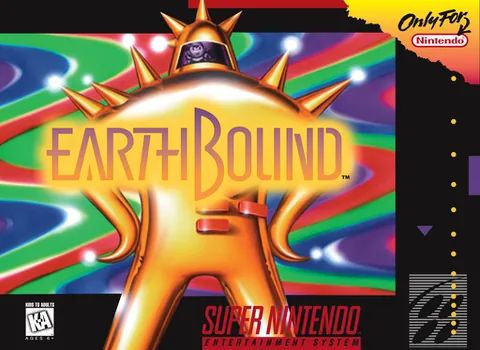
EarthBound
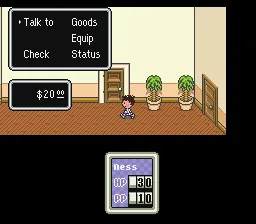
Instead of dragons you fight enraged hippies, cultists and a hovering UFO. Instead of mana you crackle with the psychic power of PSI, and instead of a tavern you go rest at a hotel. Welcome to EarthBound, an RPG that took every convention of the genre and, with a smile, turned it inside out. Shigesato Itoi's bizarre, funny and unexpectedly touching game is a cult legend today, though the road to that status was anything but easy.
EarthBound takes place in no fantasy realm but in an ironically warped version of modern America. You play as a boy named Ness and his friends, wandering through suburbs, cities and shopping malls, while the tone of the storytelling constantly leaps between mocking parody and surprisingly sincere emotion. Beneath the humor lies a game that can be unexpectedly grown-up and touch you in a way you wouldn't expect from wacky satire.
Combat has its original ideas too. Famous is the so-called "rolling HP" system: after taking a hit, a character's health doesn't drop all at once but ticks down like a counter. When you take a fatal blow, you still have a few moments in which you can turn things around — defeat the enemy, heal up or flee before the counter reaches zero. This creates a tense race against the clock that lends the fights a surprising tactical layer.
Commercially, however, it was a flop in the US. The game was sold in an unusually large and expensive box that included a thick strategy guide — among other things as an anti-piracy measure. The high price and unconventional presentation put buyers off and the game sank without a trace. Only over the years, with the help of devoted fans, did it become one of the most cherished cult titles of all.
Today EarthBound is a symbol of the idea that a game need not take itself or its genre seriously to leave a deep mark. Its influence can be felt across a whole wave of independent games, and Ness became a fixture in the Super Smash Bros. fighting games, thanks to which his legacy lives on even among players who never touched the original.
Why play it: For unmistakable humor, a touching heart hidden beneath the parody, and an original combat system — a cult classic like no other.
Game 11 of 154 for Super Nintendo